Demodara Loop: How Does Sri Lanka’s Famous Railway Loop Work?
Sri Lanka’s hill-country railway is famous for mountain views, tea estates and dramatic bridges. But just beyond Ella lies one of its most unusual engineering features.
At Demodara Loop, the railway curves around a hillside, passes beneath itself through a tunnel and emerges at a different elevation. Even more remarkably, Demodara railway station sits directly above the tunnel.
What Is the Demodara Loop?
The Demodara Loop is a spiral section of railway near Demodara in Sri Lanka’s Uva Province.
It forms part of the Main Line through the central highlands and is located beyond Ella on the railway towards Badulla.
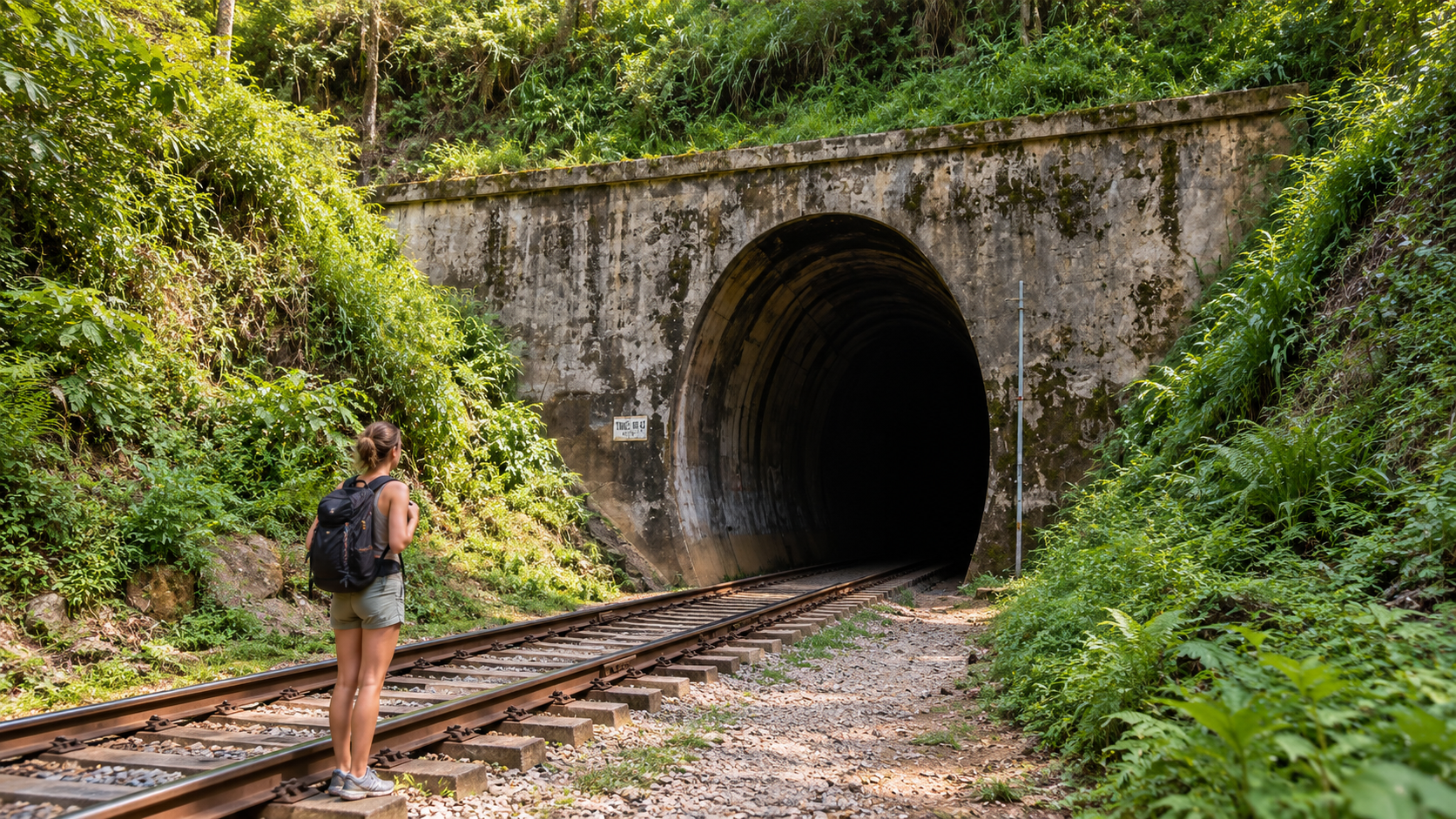
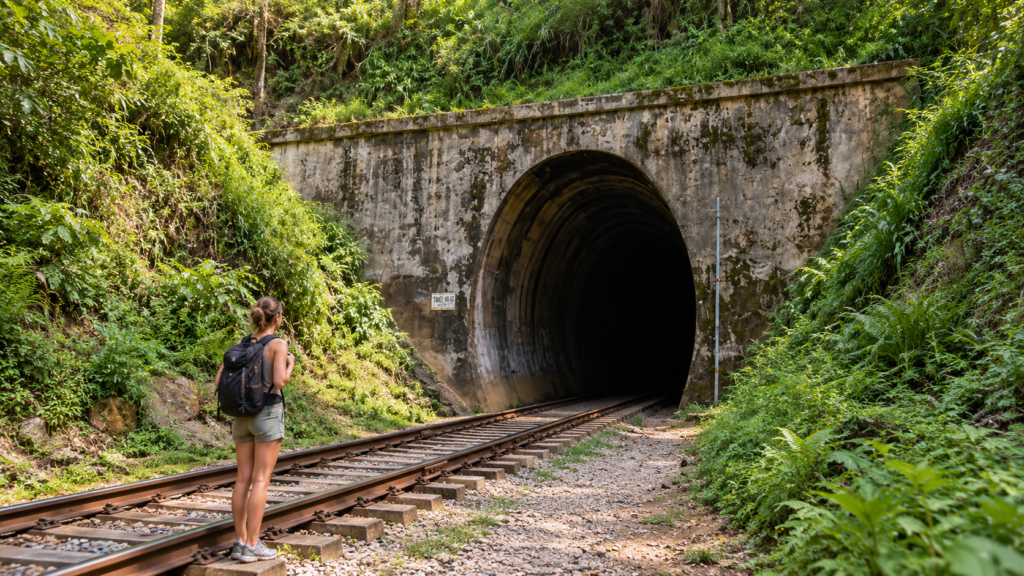
Instead of continuing directly across the steep landscape, the track curves around the hillside in a large loop. It eventually passes beneath an earlier section of its own route through Tunnel No. 42.
The complete loop is approximately 900 metres long.
Why Was the Demodara Loop Necessary?
A train depends on the relatively small amount of friction between steel wheels and steel rails. If a gradient becomes too steep, locomotives can struggle for traction while descending trains become more difficult to control safely.
This created a major challenge when the railway was being extended through Sri Lanka’s mountainous Uva region.
The terrain around Demodara changed elevation too quickly for the railway to simply take a direct route while remaining within the gradient limits used by the Ceylon Government Railway.
How Does the Demodara Loop Work?
Imagine trying to reach a lower point on a steep hillside without travelling straight down.
The Demodara Loop applies the same principle to a railway.
A train travels around the hillside following the curved track. As it continues around the loop, its elevation gradually changes.
Eventually, the railway reaches Tunnel No. 42.
The train enters the tunnel and passes directly underneath Demodara railway station before emerging on the other side.
Is Demodara Station Really Above the Tunnel?
Yes.
This is the feature that makes the location particularly memorable.
Demodara railway station sits above the tunnel through which the railway passes as part of the spiral.
The combination of station, spiral railway and tunnel makes Demodara one of the most distinctive engineering locations on Sri Lanka’s railway network.
When Was the Demodara Loop Built?
The railway extension through this part of the Uva highlands was completed during the early 20th century, with the Demodara engineering works associated with the extension to Badulla becoming operational in the early 1920s.
Sri Lanka’s rail network expanded into the highlands during the colonial period partly to move plantation produce, particularly tea, toward Colombo and its port.
For more context on this landscape, explore Sri Lanka’s tea country.
Did a Turban Inspire the Design?
According to local folklore, an engineer struggling with the problem saw a kankany , a supervisor on a tea estate, tying or re-tying his turban around his head.
The circular movement supposedly inspired the idea of wrapping the railway around the hill.
Different versions of the story have circulated over time, and the historical evidence is not strong enough to establish exactly how the design idea originated.
Is the Demodara Loop the Same as Nine Arch Bridge?
No.
They are two separate pieces of railway engineering, although both are found along the railway near Ella and Demodara.
The Demodara Loop solves a different problem: changing elevation by extending the railway around a hill.
Travellers exploring Ella can easily encounter several railway landmarks in the same area. The site’s things to do in Ella guide also covers the wider attractions around the town.
Can Travellers Visit Demodara Loop?
Yes. Demodara is accessible from Ella, and the railway itself remains part of Sri Lanka’s active network.
One of the most interesting ways to understand the engineering is simply to travel through it by train. Watching the landscape change as the railway curves around the hill makes the design easier to understand than looking at a photograph alone.
Why Is the Demodara Loop Important?
The Demodara Loop demonstrates how railway engineers adapted a conventional rail system to Sri Lanka’s difficult mountain terrain.
Rather than overcoming the hill with an extremely steep track, they used distance, curves and a tunnel to control the gradient.
That principle is what makes the design so clever.
Conclusion
The Demodara Loop is much more than an unusual bend in Sri Lanka’s railway.
For travellers exploring Ella, Demodara offers a fascinating reminder that the beauty of Sri Lanka’s hill-country railway is not only found in its views. It is also found in the engineering that made travelling through these mountains possible.