Ravana Cave Ella: What’s Behind the Legend?
High in the hills near Ella is a cave connected to one of South Asia’s most famous ancient stories.
Ravana Cave Ella is traditionally associated with King Ravana and Sita from the Ramayana. But behind that familiar legend is another fascinating story: archaeological evidence shows that humans were using the cave thousands of years ago.
For travellers, the cave offers something different from Ella’s famous viewpoints and waterfalls. It is a place where mythology, archaeology and the mountain landscape come together.
What Is the Legend of Ravana Cave Ella?
The story surrounding Ravana Cave Ella comes from traditions associated with the Ramayana, the ancient Sanskrit epic.
In the Ramayana, Ravana, king of Lanka, abducts Sita, the wife of Rama, and takes her to Lanka.
Local tradition later connected several locations across Sri Lanka with events from this story. Ravana Cave near Ella became one of them.
According to the legend associated with the site, Ravana used the cave as a place to hide Sita. Nearby Ravana Falls is also connected with the tradition, with stories claiming that Sita bathed in pools formed by its water.
Is There Evidence That Ravana Used the Cave?
There is no established archaeological evidence proving that Ravana kept Sita inside Ravana Cave Ella.
Stories about Ravana using caves and underground passages around Sri Lanka are part of a much wider collection of local traditions. Some versions even describe interconnected tunnels extending between different locations.
These stories are fascinating, but visitors should distinguish them from archaeological findings.
The confirmed archaeological significance of the cave comes from something much older: evidence of prehistoric human activity.
A Cave With a Much Older Human Story
Archaeological investigations at Ravana Cave have uncovered evidence of ancient human occupation.
Sri Lankan government sources report discoveries associated with prehistoric habitation at the site, with evidence extending back tens of thousands of years.
This changes the way the cave can be understood.
Its importance does not depend entirely on whether the Ravana story is historically true. The cave was part of Sri Lanka’s human landscape long before Ella became a modern travel destination.
Where Is Ravana Cave?
The cave is located in the hills outside Ella, close to the Ravana Ella temple area.
It should not be confused with Ravana Falls.
Ravana Falls is the dramatic roadside waterfall found along the Ella–Wellawaya road, while the cave requires a climb uphill from the temple area.
Both places share the Ravana name and are connected through local traditions, but they are separate attractions.
For a broader look at the area’s waterfalls, viewpoints, hikes and landmarks, see things to do in Ella.
What Is the Walk to Ravana Cave Like?
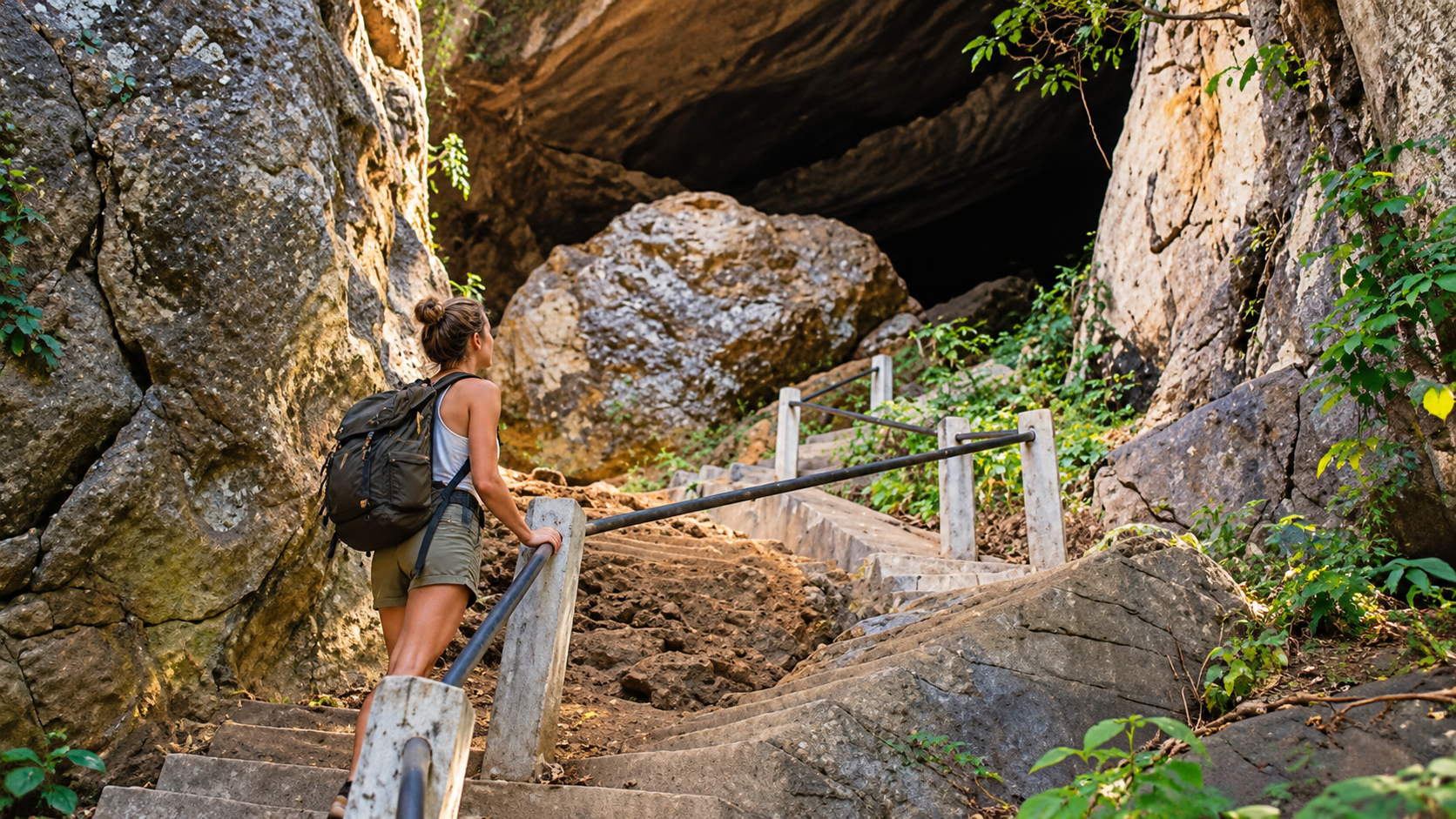
The route begins around the Ravana Ella temple area and continues through a long series of steps and uneven sections towards the cave. The climb can be demanding, particularly in warm or wet weather.
Good footwear is sensible, and visitors should allow enough time rather than treating it as a quick roadside stop.
The cave itself may appear relatively simple after the climb. Its appeal is less about finding an enormous underground chamber and more about standing in a place surrounded by layers of local legend, prehistoric history and Ella’s mountain scenery.
Travellers planning other hikes in the area can also compare Ella Rock and Little Adam’s Peak before deciding how much climbing to include during their stay.
What About the Nearby Ravana Ella Temple?
The Ravana Ella cave temple below the famous cave adds another historical layer to the area.
Sri Lanka’s Department of Hindu Religious and Cultural Affairs records a tradition connecting the cave temple with King Valagambahu, who ruled during the Anuradhapura period. The temple cave contains a drip ledge, paintings and sculptures, including artistic features associated with the Kandyan period.
This history is separate from the story of Ravana and Sita.
Why Does the Ravana Legend Remain Important?
Legends do not have to be archaeologically proven to influence how people understand a place.
For generations, stories surrounding Ravana have connected caves, waterfalls and mountains across Sri Lanka with characters and events from the Ramayana.
The legend also demonstrates how physical places can accumulate different meanings over time. A prehistoric shelter can later become connected with religious tradition, folklore and eventually modern travel.
Visitors exploring more of the hill country can discover how Ella fits into a wider Sri Lankan journey through Wander Sri Lanka.
Is Ravana Cave Ella Worth Visiting?
Ravana Cave Ella is most rewarding for travellers interested in mythology, archaeology and lesser-known places rather than those expecting a spectacular show cave.
The climb is part of the experience.
At the top, the cave provides a chance to consider two very different stories: the legendary world of Ravana and Sita, and the much older archaeological evidence of people who occupied this landscape thousands of years ago.
Conclusion
Ravana Cave Ella is often introduced through the dramatic story of Ravana hiding Sita, but its significance goes beyond the Ramayana tradition.
There is no archaeological proof that the events of the legend occurred inside the cave. There is, however, evidence showing that people occupied the site in prehistoric times.
That combination makes Ravana Cave Ella particularly intriguing — a place where ancient human history, enduring mythology and the mountains around Ella all meet.